
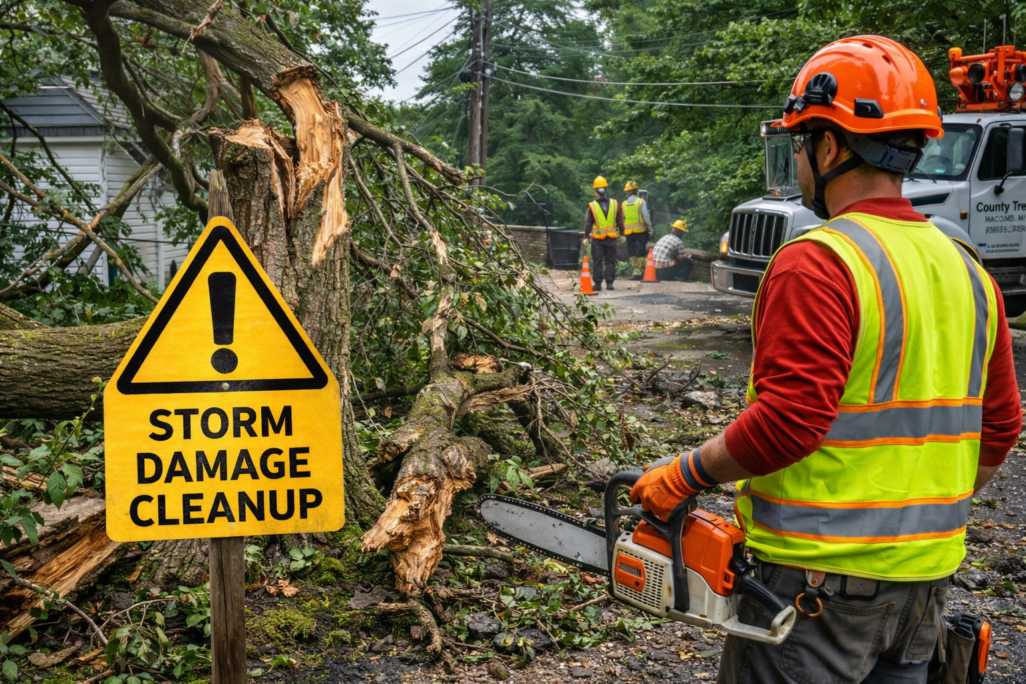
Safety-First Tree Cleanup Tips Every Michigan Homeowner Should Know
Severe weather in Michigan—whether it’s heavy snow, ice storms, or high winds—can leave behind a dangerous mess of broken branches, leaning trees, and scattered debris. While it may be tempting to grab a chainsaw and start cleaning up, storm-damaged trees can be extremely hazardous.
Before you take action, it’s important to understand how to approach cleanup safely and strategically, following recommended practices used by professionals and state agencies.
Why Storm-Damaged Trees Are So Dangerous
After a storm, trees may look stable—but appearances can be deceiving. Hidden dangers include:
- Hanging limbs (“widowmakers”) ready to fall at any moment
- Split trunks that can collapse unexpectedly
- Trees under tension that can snap or shift suddenly
- Downed branches near power lines
Even small jobs can turn into serious accidents without the proper training and equipment.
Step 1: Assess the Situation from a Safe Distance
Before doing anything, take a step back and evaluate your property.
Look for:
- Trees leaning toward structures
- Large broken limbs hanging overhead
- Uprooted trees or exposed roots
- Branches tangled in utility lines
⚠️ If power lines are involved—stay far away and call your utility company immediately.
Step 2: Know What You Can (and Shouldn’t) Handle
Not all cleanup tasks are created equal.
Safe for Homeowners:
- Picking up small branches and debris
- Light yard cleanup
- Clearing walkways
Leave to Professionals:
- Large tree limbs
- Trees near homes, driveways, or power lines
- Chainsaw work involving height or tension
- Uprooted or partially fallen trees
A good rule of thumb:
👉 If it requires a ladder or a chainsaw, it’s best to call a professional.
Step 3: Use Proper Safety Gear
If you are handling minor cleanup, protect yourself with:
- Heavy-duty gloves
- Safety glasses or face shield
- Steel-toe boots
- Helmet (especially under damaged trees)
Never work alone. Always have someone nearby in case of emergency.
Step 4: Be Cautious with Chainsaws
Chainsaws are one of the most dangerous tools used during storm cleanup.
Key safety tips:
- Never cut branches under tension (they can snap back violently)
- Keep both hands firmly on the saw
- Avoid cutting above shoulder height
- Maintain stable footing at all times
Improper cutting is one of the leading causes of injury during storm cleanup.
Step 5: Watch for Hidden Tree Damage
Not all storm damage is obvious. Trees may appear fine but have internal structural issues.
Signs to look for:
- Cracks in the trunk
- Loose or shifting roots
- Sudden leaning
- Missing bark or deep wounds
These trees may become hazardous later and should be evaluated by a professional.
Step 6: Avoid Moving Firewood from Damaged Trees
Storm-damaged wood may seem useful, but moving it can spread pests and diseases like oak wilt.
Best practice:
- Keep firewood local
- Don’t transport it to other areas
- Use or dispose of it near where it fell
Step 7: Call a Professional Tree Service When Needed
Storm cleanup often requires specialized equipment and expertise.
Professional crews can safely handle:
- Emergency tree removal
- Hazardous limb removal
- Debris hauling and cleanup
- Structural assessments
- Preventative pruning after storms
They also know how to work around structures and utilities without causing further damage.
Why Safety Should Always Come First
Storm cleanup isn’t just about clearing your yard—it’s about protecting your home, your family, and yourself.
Attempting to handle dangerous tree work without proper training can lead to:
- Serious injury
- Property damage
- Increased repair costs
A professional approach ensures the job is done quickly, safely, and correctly.
Be Prepared Before the Next Storm
The best way to deal with storm damage is to reduce the risk ahead of time.
Consider:
- Routine tree inspections
- Removing dead or weak limbs
- Pruning for structural strength
- Addressing trees too close to your home
Preventative care can make a major difference when the next storm hits.
Need Help with Storm-Damaged Trees?
If your property has been affected by severe weather, don’t take unnecessary risks.
County Tree II provides safe, reliable storm damage cleanup and emergency tree services throughout Michigan.
📞 Contact us today for a free estimate and let our experienced team restore your property safely and efficiently.
Storms may be unpredictable—but your response doesn’t have to be. Stay safe, stay smart, and when in doubt, call the pros. 🌳